How systems become susceptible to attacks

Image source: yokogawa.com

Cyber threats remain despite efforts to upgrade our systems. Michael Coppola is definitely convinced that human error usually causes such breach. And this is what hackers are trying to capitalize in. Here’s a few of the common instances when human errors expose our cyber security systems to certain risks.

Opening attachments

Michael Coppola notes that not a few in law enforcement are quite gullible, especially in opening emails that are not specifically for them. This happens, for instance, when cops receive emails from a sender posing as airline or a travel agent, telling them that they forgot to book a flight, then they begin opening the emails and attachments. Only open email attachments from known senders. A cop’s training must make him- or herself suspicious of any doubtful emails. Be wary of the following file extensions: .zip, .exe, .doc, and .pdf.

Opening links
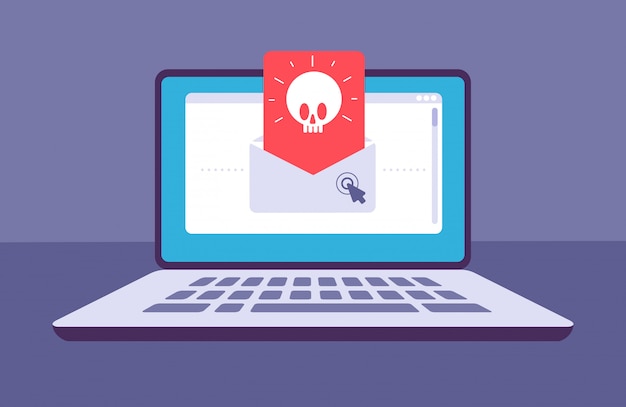
Image source: freepik.com

Like emails, if a link looks suspicious then don’t click it. Otherwise it may unlock the virus which you may not be aware of that will be occurring in the background, without you noticing it.

Opening ads

Ads may employ animated graphics that may influence you to click it. Michael Coppola warns cops against falling to such trap. To solve this, agencies must adopt a standard procedure in preventing such practices or tell the IT to simply block certain ads.

Permissions

Just because you are the chief doesn’t mean you have blanket authority to access the system. Michael Coppola agrees to limit permission to an agency’s hierarchy in order to avoid the human aspect of a system’s vulnerability.

Michael Coppola is a former law enforcer who is now a tech entrepreneur based in New Jersey. His company provides essential tech services for law enforcement agencies, such as e-mail services, data backup and disaster recovery. To know more information, you may visit this website.

An overview of Advanced Authentication

Image source: securityintelligence.com

Michael Coppola has an urgent reminder to everyone in law enforcement: Your data is only as safe as the weakest officer. What he meant was for his former colleagues to adopt more security measures, such as Advanced Authentication, than what was prescribed, due to the accelerated pace hackers are trying to gain access to highly sensitive criminal justice information.

Basically, Advanced Authentication is a requirement in which you may access information – such as criminal justice information – from any portable device such as a laptop, phone, or tablet, in two ways: “Something you know” (a password) and “Something you have” (something tangible). This article will explore the essential role they play in how Advanced Authentication works.

Passwords have long been held as the ideal way to secure personal and sensitive information. However, as the internet gets more advanced, Michael Coppola notes that even a simple username and password are not guaranteed. As explained earlier, Advanced Authentication is a two-step process, and password is just one of the two. And because passwords can be hacked, ‘something tangible’ is required as an added layer of security. Just think of the “2-factor authentication” approach.

Image source: gstatic.com

Advanced Authentication is, actually, a broad idea of 2-factor authentication, explains Michael Coppola. In this method, a one-time password (OTP) is generated by either a USB drive, delivered via text or a phone application and then entered before accessing information. It is used in addition to the username and password. Since OTP is valid for one time and on an external device, there is no way a hacker can benefit from it.

Michael Coppola is a former law enforcer who is now a tech entrepreneur based in New Jersey. His company provides essential tech services for law enforcement agencies, such as e-mail services, data backup and disaster recovery. More on Michael and his work here.

Design a site like this with WordPress.com
Get started