Blogs

How systems become susceptible to attacks

Image source: yokogawa.com

Cyber threats remain despite efforts to upgrade our systems. Michael Coppola is definitely convinced that human error usually causes such breach. And this is what hackers are trying to capitalize in. Here’s a few of the common instances when human errors expose our cyber security systems to certain risks.

Opening attachments

Michael Coppola notes that not a few in law enforcement are quite gullible, especially in opening emails that are not specifically for them. This happens, for instance, when cops receive emails from a sender posing as airline or a travel agent, telling them that they forgot to book a flight, then they begin opening the emails and attachments. Only open email attachments from known senders. A cop’s training must make him- or herself suspicious of any doubtful emails. Be wary of the following file extensions: .zip, .exe, .doc, and .pdf.

Opening links
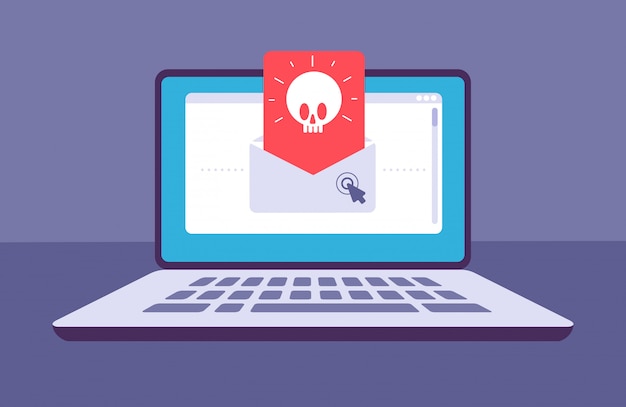
Image source: freepik.com

Like emails, if a link looks suspicious then don’t click it. Otherwise it may unlock the virus which you may not be aware of that will be occurring in the background, without you noticing it.

Opening ads

Ads may employ animated graphics that may influence you to click it. Michael Coppola warns cops against falling to such trap. To solve this, agencies must adopt a standard procedure in preventing such practices or tell the IT to simply block certain ads.

Permissions

Just because you are the chief doesn’t mean you have blanket authority to access the system. Michael Coppola agrees to limit permission to an agency’s hierarchy in order to avoid the human aspect of a system’s vulnerability.

Michael Coppola is a former law enforcer who is now a tech entrepreneur based in New Jersey. His company provides essential tech services for law enforcement agencies, such as e-mail services, data backup and disaster recovery. To know more information, you may visit this website.

An overview of Advanced Authentication

Image source: securityintelligence.com

Michael Coppola has an urgent reminder to everyone in law enforcement: Your data is only as safe as the weakest officer. What he meant was for his former colleagues to adopt more security measures, such as Advanced Authentication, than what was prescribed, due to the accelerated pace hackers are trying to gain access to highly sensitive criminal justice information.

Basically, Advanced Authentication is a requirement in which you may access information – such as criminal justice information – from any portable device such as a laptop, phone, or tablet, in two ways: “Something you know” (a password) and “Something you have” (something tangible). This article will explore the essential role they play in how Advanced Authentication works.

Passwords have long been held as the ideal way to secure personal and sensitive information. However, as the internet gets more advanced, Michael Coppola notes that even a simple username and password are not guaranteed. As explained earlier, Advanced Authentication is a two-step process, and password is just one of the two. And because passwords can be hacked, ‘something tangible’ is required as an added layer of security. Just think of the “2-factor authentication” approach.

Image source: gstatic.com

Advanced Authentication is, actually, a broad idea of 2-factor authentication, explains Michael Coppola. In this method, a one-time password (OTP) is generated by either a USB drive, delivered via text or a phone application and then entered before accessing information. It is used in addition to the username and password. Since OTP is valid for one time and on an external device, there is no way a hacker can benefit from it.

Michael Coppola is a former law enforcer who is now a tech entrepreneur based in New Jersey. His company provides essential tech services for law enforcement agencies, such as e-mail services, data backup and disaster recovery. More on Michael and his work here.

Two qualities to look for in an IT security provider for law enforcement agencies

Image source: netmotionsoftware.com

Michael Coppola is always happy to share advice and updates on the technology that his company provides to the leading law enforcement agencies in the country. Many people think that to be a service provider for said agencies requires a lot of accolades and qualifications. This may be true to a certain extent, but as Michael shares, you need to especially have these two qualities in a service provider to make things count.

1. Culture centric

Many IT security providers have the means to make things work in terms of the continuously developing technology, shares Michael Coppola. Of course, anyone can claim to be cutting-edge as far as advancement is concerned, and they can probably give each other a run for the money. However, what providers have is the exact culture in law enforcement agencies. Simply put, a company whose bulk of workforce has formerly served in law enforcement knows what it takes to make things work, especially at the notoriously fast pace in law enforcement operations.

Image source: bacsit.com

2. Experience

Having a robust technology to support law enforcement is already quite an achievement in itself. Law enforcement agencies have complex needs because of the level of work that they do. And yet, having the tech pedigree can only bring you to the front door. Experience matters in this arena, especially in the areas of officer safety, agency efficiency and reliability. Companies bring to their clients a vast wealth of resources that have not only the technology experience but also the experience as a security policy user, administrator, and instructor, among others.

Michael Coppola began his career as an EMT with the Hackensack Volunteer Ambulance Corps and later worked as a volunteer firefighter with the Rochelle Park Fire Department and West Paterson Fire Department. He now owns and operates an IT company . For more about Michael, visit this page.

Malwarebytes: Giving your office an edge

Image source: malwarebytes.com

Malware (or malicious software) remains a serious cybersecurity threat. This is why Michael Coppola, who once served in law enforcement, developed “Malwarebytes” to protect law enforcement agencies against any cybersecurity breach. So, how does this thing works?

Automated Remediation

This Malwarebytes feature acts as roving security. It scours the system and reverses the changes done by malware as though no malware attack occurred. Moreover, Malwarebytes has Multi-Vector Protection (MVP), which has seven layers of protection that identify the threat, strengthen the system, and prevent access to malicious websites, ad networks, scammers, and so-called “bad neighborhoods.”

Endpoint Isolation

Malwarebytes Detection and Response uses three modes of device isolation:

1. Network Isolation disrupts communication, thus isolating the malware, making the attackers unable to breach the system.

2. Process Isolation that restricts certain operations, thereby halting the malware while end users still work.

3. Desktop Isolation warns the end user of a malware threat, temporarily disabling access, and performs device analysis.

Ransomware Rollback

A single click enables Malwarebytes incident responders to revert files and devices to a state prior to a malware attack. This is made possible by using local cache on each endpoint, with up to 72 hours of relevant changes stored.

Image source: amplifyintelligence.com

Michael Coppola is a New Jersey-based tech entrepreneur who once served as a lieutenant with the Palisades Interstate Parkway Police Department. His company provides essential technical services for law enforcement teams such as e-mail services, data backup and disaster recovery, file sharing, two-factor authentication, website hosting and design, physical hard drive and device shredding, cloud computing, cloud storage, and more. Michael also enjoys photography and has had many of his photos published in The New York Times, the Bergen Record, and Fire Rescue Magazine. For more updates like this, visit this page.

The Smart Move: Why small companies should switch to cloud-based storage

Image source: csail.mit.edu

More often than not, small businesses are at a disadvantage financially when they first open. This is because most business owners start their endeavors by using their savings, a loan from credit agencies, or is supported by an investor. Because of the inherent financial risk of opening a small business, business owners cannot afford to purchase expensive equipment unless absolutely necessary.

For a small company, IT infrastructure can be one of the biggest expenditures, according to Michael Coppola, a New Jersey-based tech entrepreneur. This is why a lot of small and medium-sized companies are switching to cloud-based storage systems as opposed to traditional physical memory drives. The question now stands, should you switch as well?

Image source: technotification.com

As mentioned, a small business can hardly afford to purchase equipment that isn’t integral to the company’s operations. Physical network storage devices can range from a few hundred dollars to thousands of dollars. Also know that the aftermarket for large capacity storage devices is almost non-existent. So, as far as investments go, purchasing a physical storage drive is riskier compared to availing of cloud-based storage systems.

Another important reason to choose cloud-based storage systems over physical ones is data protection. Physical storage systems can be destroyed in a building fire, flooding, or simple degradation over the years if not properly maintained. But, according to Mike Coppola, the real danger in physical storage systems is networking mismanagement. If your network structure isn’t 100% airtight, it would be possible for an attacker to abuse poor network segmentation to break in and steal your data or those of your clients.

Mike Coppola offers services that follow stringent security policies, data protection measures, and above the line support for the country’s various law enforcement groups. For similar articles, visit thiswebsite.

Making sense of the current demand for cloud storage

Image source: theconchtech.com

It’s no longer news that the bulk of operations that used to be done physically have made the jump into cyberspace since the COVID-19 pandemic forced people to stay indoors. It seems that this has become the best survival move available to mostly everyone in the business. Michael Coppola helps make sense of the current demand for cloud storage in today’s blog.

For a better appreciation, cloud storage must first be understood as a special model of computer data storage wherein digital data is stored in pockets that follow a certain logic. This is what is meant when something is said to be on “the cloud.” At the physical level, this means that the data is stored in multiple servers, whose care is under hosting companies like the one that Michael Coppola owns.

Image source: fossbytes.com

Because of today’s movement to the virtual space, an increasing number of people become more glued to their devices. It used to be that a huge part of the motivation to utilize mobile gadgets was entertainment, or any other means to pass the time. Now, it means survival. Work is done online from the comfort of home.

Migrating to the virtual space has created a natural demand for data to be saved and accessed, as a natural part of managing the resources that are required to do work online. For this reason, cloud storage plays a bigger role today than it ever did in the past.

Even in organizations that need to access data on demand, cloud hosting has served as a critical ally. For instance, the law enforcement industry is now looking to the cloud to manage and store at least part of their critical data in it. Michael Coppola asserts that the key to turning cloud computing into an asset is to choose the most secure cloud hosting service to partner with.

In addition to cloud computing services, Michael Coppola offers secure mobility products and mission-critical infrastructures such as data protection, disaster recovery, and cloud storage to law enforcement agencies. For more updates like this, check out this blog.

Why should businesses opt for cloud storage?

Image source: radionz.co.nz

Over the past decade, the popularity and demand for cloud storage have skyrocketed – and for a good reason. The infrastructure for it has developed to the point that servers could now hold near-endless amounts of information. And that is just one of the many important points Michael Coppola stresses when discussing the need for businesses to use cloud storage.

For this blog, Michael Coppola lists two more reasons business owners who have yet to get cloud storage service should do so.

1. Cloud storage allows businesses to not only store but also share data with ease.

Many companies today have more than one employee connected to the internet. These employees open, use, share, and save their files online. Using cloud storage expedites all these processes. It is faster than sharing files through email. It is also potentially more effective and time-efficient than anything system admins can think of for in-house LAN systems.

Image source: networkcomputing.com

2. Cloud storage can be accessed anywhere, anytime.

Since most devices nowadays are internet-ready, Michael Coppola says that anyone in the company can access the needed files in cloud storage from anywhere. While this is one of the best advantages that companies may have from cloud storage, Michael reminds businesses everywhere about the need for security, so only the authorized personnel may access the sensitive data.

Michael Coppola continues to support law enforcement groups by delivering secure and reliable data management products that satisfy regulatory and practical requirements. For additional reading, visit this page.

The key characteristics of a modern security system for law enforcement

Image source: connectorsupplier.com

Cutting-edge technology in security systems today provide for very interesting capabilities that were hard to imagine a mere decade ago. In the field of law enforcement, security systems, particularly in the cloud, are even made more powerful. Industry expert Michael Coppola shares his ideas on this with us today.

Essentially, cloud hosting should have several elements with it as a bare minimum.

On-demand self-service allows a consumer unilateral provisioning of computing capabilities, such as server time and network storage, without the need for human interaction with each service provider.

Image source: phoenixnap.com

Resource pooling ensures that the provider’s computing services are pooled so these may serve multiple consumers with the use of a multi-tenant model, further allowing for more freedom in assigning and re-assigning physical and virtual resources including but not limited to storage, processing, memory, and network bandwidth.

Rapid elasticity is also a must. As there are clear advantages with quick provisioning, cloud services should have the ability to be taken down quickly as well to scale rapidly outward and inward to match appropriately with demand. Michael Coppola adds that this flexible movement from one extreme to another is what is defined as elastic.

In the highly specialized niche of law enforcement, urgency is the norm. The cloud hosting and security measures that are necessary for this industry have to be resonant with the Criminal Justice Information Services Security Policy. This is what truly makes modern security systems a cut above the rest, explains Michael Coppola.

IT and cybersecurity expert Michael Coppola has over 25 years of experience in fire rescue and emergency medical services. For more on his expertise, visit this page.

Online threats: What business owners need to know

Image source: theamegroup.com

Since the internet was open to the public, it has been perhaps one of, if not the most revolutionary tool for businesses everywhere. However, with the immensity and complexity of the internet, there will inevitably be downsides to it. And according to Michael Coppola, there are things that business owners have to pay attention to, such as cybercrime.

These online threats that breach, steal, and wreak havoc on information networks may have profound negative effects on companies. They may even cause irreparable damage. Michael Coppola mentions that one of the worst things that can happen to businesses is for hackers to steal clients’ sensitive information, such as real names, credit card and bank account details, and more. Losing all this data proves a company is not secure. It also dashes any hopes that people will be trusting said company in the future.

Image source: csoonline.com

In other instances, cybercriminals aim their attacks directly at business IT infrastructure, sending harmful programs such as malware, viruses, and the like with the goal of causing devastation and chaos.

This is why Michael Coppola entered the business he is in – to help companies and law enforcement agencies face these online threats head-on. He believes that once an organization goes online with any facet of its operations, cybersecurity should be a top priority.

Michael Coppola works as an entrepreneur in the cloud computing industry, and supports law enforcement groups by delivering secure and reliable data management products that satisfy regulatory and practical requirements. For more on Michael, visit this page.

The most notorious enemies of an antivirus

Image source: cyberdb.com

As technology becomes more available and more developed to make life easier for all of us, cybercriminals too have become more sophisticated and more evolved to change with the times. In the world of computers, sometimes a reliable antivirus program is not enough.

Today, Michael Coppola talks about some of its most notorious methods cybercriminals use to threaten users and companies alike.

1. Phishing and pharming

Phishing and pharming are methods that trick people into thinking they’ve been contacted by a legitimate business. This is a familiar scenario experienced by people who have encountered phishing or pharming before. While they are detected by antivirus programs, it’s still highly recommended that users stay vigilant.

2. Social media attacks

Weird ads on social media may be common and some of them may be created by cybercriminals. Michael Coppola warns that computer viruses have found a home in social media, where there are users who can’t stop themselves from opening links and files out of curiosity.

3. Identity theft

Unfortunately, the convenience of having bank details stored in a mobile phone is also the cause of so many cases of identity theft online. All it takes is a single program to enter the system and steal all the sensitive the information stored in the machine, shares Michael Coppola.

Image source: webroot.com

Michael Coppola serves as president of CJIS Solutions, which he founded in 2012 while serving as lieutenant with the PIPPD. In addition to consulting services, the company offers secure mobility products and mission critical infrastructure such as data protection, disaster recovery, and cloud storage to law enforcement agencies. For related topics, visit this page.

Design a site like this with WordPress.com
Get started